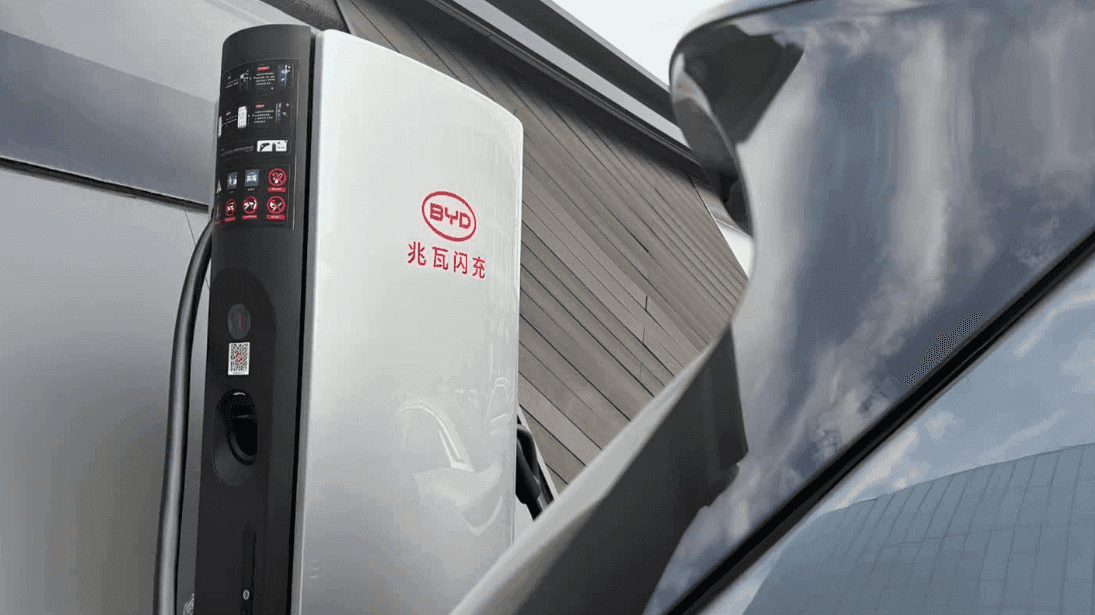
Chinese automaker BYD has introduced Flash Chargers capable of delivering charging speeds that rival traditional gasoline fill-ups, potentially transforming the electric vehicle refueling experience. These chargers can restore an EV battery from 10% to 70% in just five minutes, with a full charge achieved in approximately nine minutes.
This represents a substantial improvement over current hyper-fast chargers available in the United States, which typically require 15 to 25 minutes to reach 80% capacity - or around 40 minutes for a complete charge.
Up to 1,500 kW
Charger Output
~5 minutes
10% to 70% Charge Time
~9 minutes
Full Charge Time
350 kW
Typical US Fast Charger Max
15 -25 minutes
US Charger Time to 80%
BYD Denza Z9GT
Compatible Vehicle
How BYD's Flash Charger Works
The key to this exceptional charging speed lies in the charger's ability to deliver up to 1,500 kilowatts - more than four times the 350 kW maximum offered by most US charging stations. Rather than relying on a single piece of technology, BYD's advantage stems from its vertical integration across car manufacturing, charging infrastructure, and battery technology.
This end-to-end control over the entire charging ecosystem gives BYD a significant competitive edge over global rivals, allowing it to optimise every link in the chain simultaneously rather than working around third-party constraints.
Current Limitations
Despite the impressive headline figures, this technology comes with notable limitations. Currently, the Flash Chargers are only compatible with BYD's Denza Z9GT vehicle, which is scheduled to make its Paris debut. This restriction exists because the Z9GT utilises BYD's newest Blade battery, featuring lithium manganese iron phosphate (LMFP) chemistry specifically designed to increase energy density while supporting ultra-high charge rates.
Until other vehicles are equipped with compatible battery systems, the Flash Charger's benefits remain exclusive to a single model.
| Charger Type | Max Output | Time to 80% | Full Charge Time |
|---|---|---|---|
| BYD Flash Charger | 1,500 kW | ~5 min (10-70%) | ~9 minutes |
| US Hyper-Fast Charger | 350 kW | 15-25 minutes | ~40 minutes |
| Standard US Fast Charger | 50-150 kW | 45-60 minutes | 60-90 minutes |
The Infrastructure Challenge
Beyond vehicle compatibility, the primary challenge preventing widespread adoption involves electrical grid infrastructure. Even if rapid-charging technology were to reach the US market, implementing it at scale would require substantial investment, time, and coordination between government agencies, utilities, and private operators.
The existing electrical grid would need significant upgrades to handle the increased power demands of 1,500 kW chargers - a complex and costly undertaking that cannot be solved by technology alone.
US EV Market Headwinds
The US EV market currently faces several obstacles beyond infrastructure. A number of major automakers have recently scaled back their electric ambitions:
- Honda has cancelled upcoming electric vehicle projects.
- Hyundai and Kia have discontinued some battery-powered models.
- Lamborghini has abandoned its luxury EV initiatives.
At the policy level, the Trump administration's elimination of federal EV support - combined with an ongoing regulatory battle between federal authorities and California over air pollution standards - has created further headwinds for the industry.
The Global Race for EV Infrastructure
As China and Europe continue advancing their charging infrastructure, the United States appears to be falling behind in the global transition to electric mobility. The development of fast-charging technology like BYD's Flash Charger represents a significant step that could help address range anxiety and increase EV appeal to potential buyers.
However, experts suggest that overcoming current market challenges will require more than technological innovation alone. The US must strengthen both its infrastructure investment and policy support to remain competitive in the worldwide electrification effort.