The electric vehicle transformation currently underway represents more than a shift in transportation technology - it echoes the sweeping home appliance and automobile revolution of the 1920s, promising to reshape economics, geopolitics, and daily routines. After years of incremental improvements, the battery and EV industries have reached a critical inflection point where technological advances and economic realities are converging to accelerate adoption.
The Battery Cost Trajectory
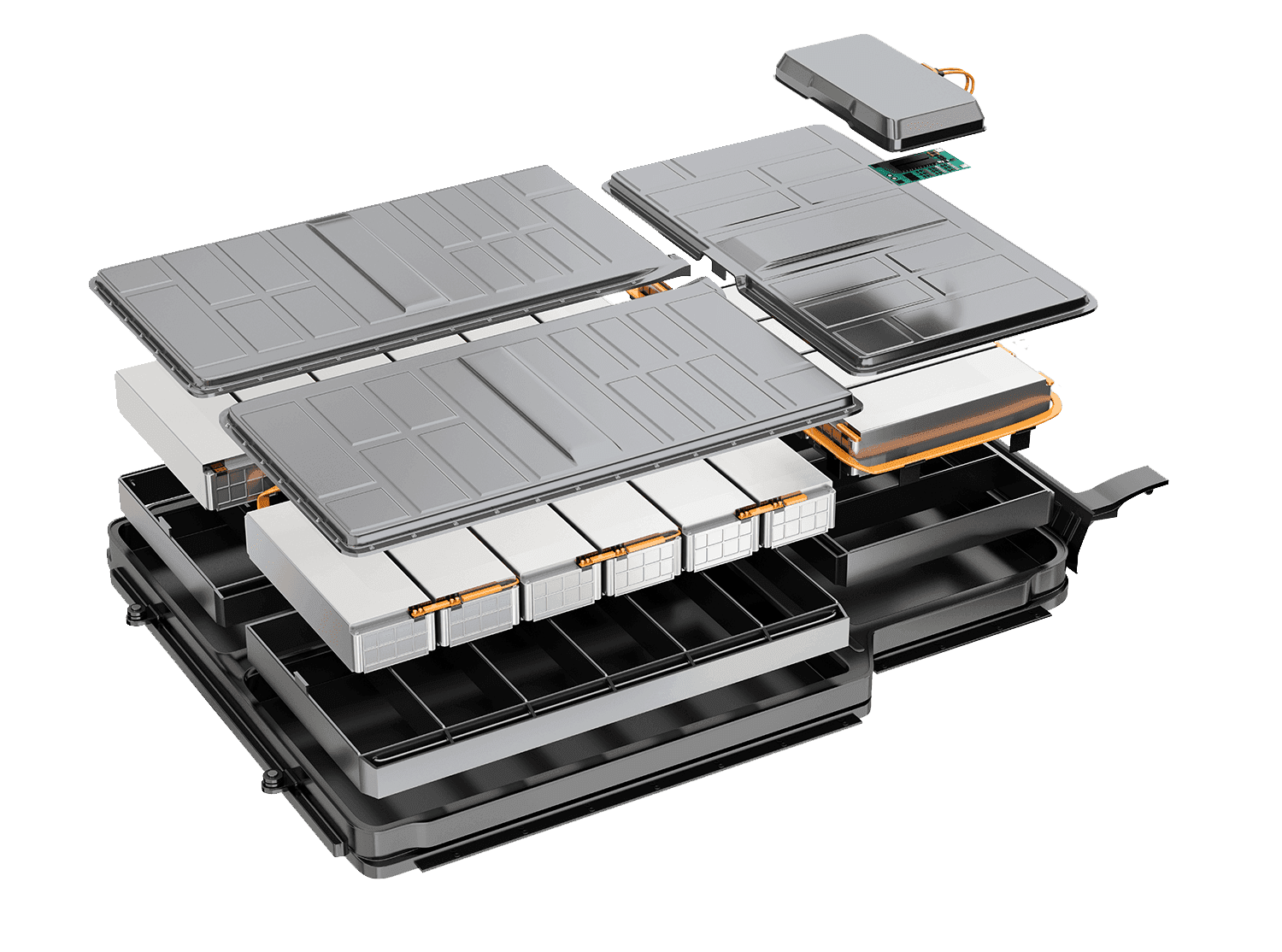
The financial trajectory of battery production tells a dramatic story of industrial maturation. Lithium-ion battery costs have plummeted approximately 90% over the past decade, now approaching the long-celebrated threshold of $100 per kilowatt-hour - a price point historically considered the gateway to cost parity with internal combustion engines.
Yet this milestone may prove insufficient. Growing consensus among industry analysts now places the actual price parity threshold closer to $60 per kilowatt-hour, suggesting that widespread consumer adoption may require greater patience than initially projected.
~90 %
Cost reduction over past decade
~$100/kWh
Current benchmark price
~$60/kWh
Estimated true parity threshold
Below $80/kWh
LFP battery current price (BloombergNEF)
Tesla Battery Day and the Competitive Frenzy
Tesla's "Battery Day" presentation on September 22, 2020, catalyzed the current competitive frenzy by laying out a concrete roadmap to reduce battery costs by 56% while increasing vehicle range by 54% within three years, targeting a $25,000 mainstream electric vehicle.
This aggressive timeline electrified the industry, prompting major manufacturers including Volkswagen, General Motors, Ford, and Stellantis to announce accelerated battery initiatives and compressed development schedules.
Chemistry Disruption: LFP Takes On NMC
The chemistry behind EV power sources is undergoing its own disruption. Traditional nickel-manganese-cobalt (NMC) and nickel-manganese-aluminum (NMA) batteries face mounting competition from lithium-iron-phosphate (LFP) alternatives, which BloombergNEF reports have already dropped below $80 per kilowatt-hour.
Tesla, Volkswagen, Ford, and Stellantis all plan to deploy LFP chemistry specifically for their most affordable vehicles, challenging the outdated perception that these batteries lack sufficient energy density for mainstream consumers. Recent demonstrations confirm that LFP batteries can now deliver ranges exceeding 300 miles per charge.
| Chemistry | Key Advantage | Key Challenge | Current Price |
|---|---|---|---|
| Nickel-Manganese-Cobalt (NMC) | High energy density | Higher cost, cobalt supply risk | ~$100/kWh |
| Nickel-Manganese-Aluminum (NMA) | Improved thermal stability | Complex manufacturing | ~$100/kWh |
| Lithium-Iron-Phosphate (LFP) | Lower cost, longer cycle life | Historically lower energy density | Below $80/kWh |
Geopolitical Shifts and Investment Flows
Geopolitical factors are simultaneously redirecting investment flows. China's regulatory crackdown on ride-hailing giant Didi Global has cast suspicion over the stock credibility of Chinese tech firms trading overseas, including major EV manufacturers like BYD, Nio, Li Auto, and Xpeng.
This shifting regulatory environment may funnel investment capital toward Western and non-Chinese battery and EV companies, potentially accelerating domestic manufacturing development across Europe and the United States.
The Osborne Effect and Legacy Automaker Risk
For traditional automakers, the transition carries existential risks beyond mere competition. As consumers grow increasingly aware that affordable EVs will reach dealerships between 2024 and 2025, many may delay purchasing combustion vehicles out of concern for future resale values.
This phenomenon is known as the Osborne Effect - named after the computer manufacturer who announced products too far in advance - and it threatens to trigger cash flow crises as millions of gasoline vehicles sit unsold on dealer lots.
Infrastructure: The Charging Bottleneck
Infrastructure limitations present another bottleneck to mass adoption. While early adopters primarily charge at home, mainstream consumers demand convenient public options. Both battery developers and automakers are now racing to perfect systems capable of delivering 100 to 200 miles of range in just 10 to 20 minutes.
However, the primary constraint lies in charging station deployment, with individual units costing tens of thousands of dollars. This gap represents one of the industry's most promising investment opportunities for the decade ahead.
100 -200 miles
Fast-charge target range delivered
10 -20 minutes
Target charge time
Tens of thousands of dollars
Cost per charging unit
The Competitive Landscape Ahead
The competitive landscape ahead promises brutal Darwinian selection. Tesla and American startups currently lead the domestic EV push, while legacy automakers scramble to defend market share. New entrants like Lordstown Motors and Nikola have already seen their valuations collapse amid viability concerns.
Meanwhile, European regulators mandate millions of EVs on roads by decade's end, and China continues aggressive domestic adoption through incentives and zero-emissions mandates.
The ultimate question facing investors and manufacturers alike remains whether ordinary consumers - presented with electric and combustion options at comparable prices - will decisively choose the plug over the pump.
What is the current cost of lithium-ion EV batteries?+
Lithium-ion battery costs have fallen roughly 90% over the past decade and are now approaching $100 per kilowatt-hour. LFP chemistry has already dropped below $80/kWh according to BloombergNEF.
At what price do EVs reach cost parity with combustion engine vehicles?+
While $100/kWh was historically cited as the parity threshold, growing industry consensus now places the real target closer to $60/kWh for true mass-market competitiveness.
What is LFP battery chemistry and why does it matter?+
Lithium-iron-phosphate (LFP) is an alternative battery chemistry that is cheaper and has a longer cycle life than traditional NMC batteries. It has historically been seen as lower energy density, but recent advances show LFP can now deliver over 300 miles of range per charge - making it viable for mainstream EVs.
What is the Osborne Effect and how does it apply to EVs?+
The Osborne Effect occurs when companies announce future products too early, causing customers to delay purchases of current products. Legacy automakers risk this as consumers anticipate affordable EVs arriving between 2024 and 2025, potentially leaving gasoline vehicles unsold and triggering cash flow problems.
What is holding back widespread EV adoption?+
The two primary barriers are battery costs that have not yet reached the $60/kWh parity threshold and the limited availability of affordable, fast public charging infrastructure.