Running out of charge in an electric vehicle is a stressful experience - but it is far more manageable than most drivers expect. Modern EVs are engineered with graduated warning systems, controlled shutdown sequences, and built-in safeguards to protect both you and the vehicle. This guide covers everything you need to know, from the first low-battery alert to getting back on the road safely.
What Happens When Your EV Runs Out of Charge?
Unlike a gas vehicle that can sputter and stop abruptly, an electric vehicle is designed with a managed shutdown sequence. When the battery is critically low, your EV enters a gradual "limp mode" with reduced power before coming to a safe, controlled stop. The entire process is built around driver warnings and system safeguards to prevent damage to the vehicle and to keep you in control.
Early Warning Systems: The 20% Threshold
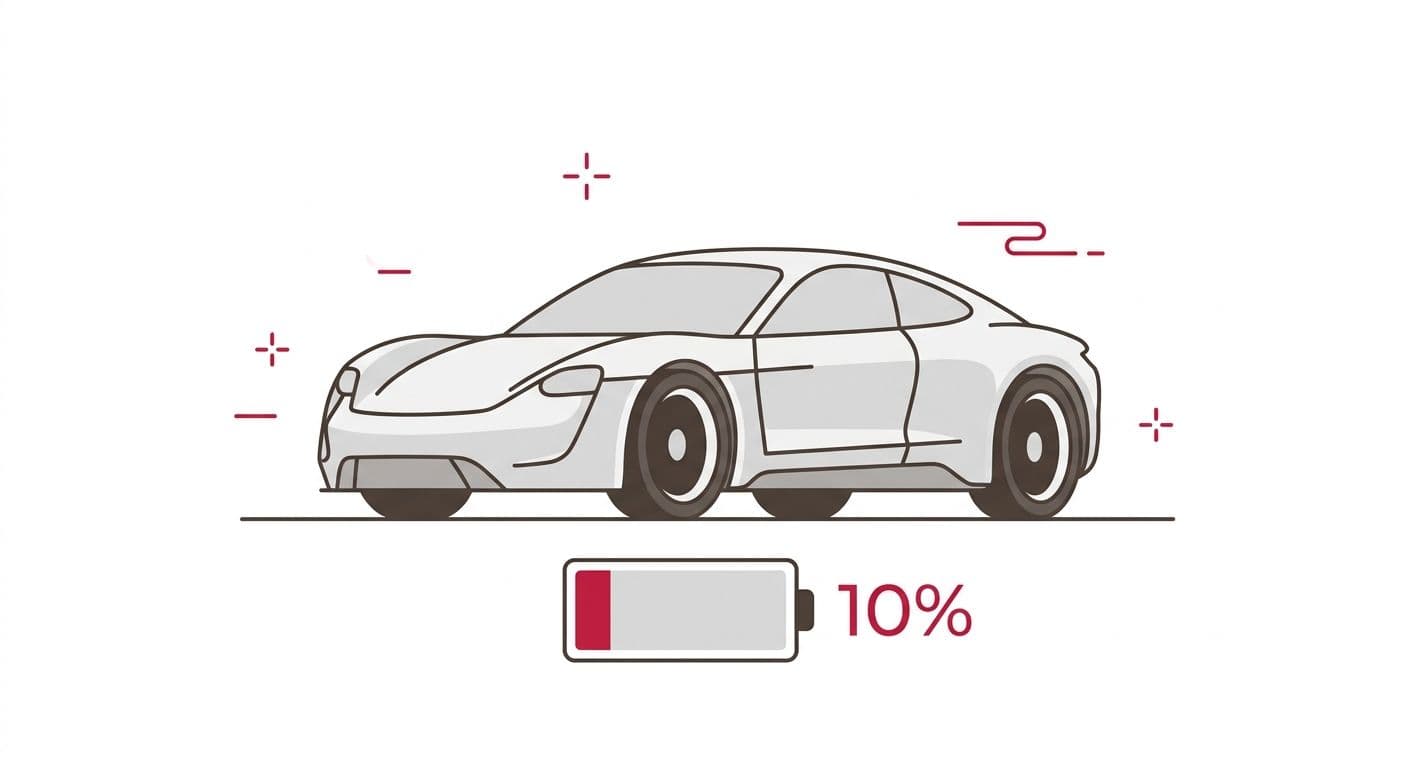
Your EV provides far more proactive communication than a traditional fuel gauge. Long before you are in danger, the car's systems begin alerting you. When the battery charge reaches around 20%, you will typically start receiving notifications indicating it is time to visit a charging station. These alerts appear on your digital dashboard and infotainment screen, often accompanied by an estimated remaining range based on your recent driving habits.
These early warnings give you a meaningful window of time to plan and act - do not ignore them.
The Shutdown Sequence: From Limp Mode to Stop
If the battery charge continues to deplete past the warning threshold, the vehicle initiates a controlled shutdown designed to protect its systems and ensure driver safety. The sequence typically unfolds in three stages:
- Power Reduction (Limp/Turtle Mode): As the charge nears zero, the car significantly reduces power output. You may see a turtle icon or similar warning on the dashboard, indicating that acceleration is limited to conserve energy for essential functions.
- Safety Systems Activation: The EV's safety systems engage automatically to manage the final stages of the shutdown, maintaining control over critical functions.
- Controlled Stop: Once the charge reaches zero, the car gradually loses drive power and comes to a stop. Importantly, steering and braking systems - which are powered separately - remain operational, allowing you to guide the vehicle safely to the roadside.
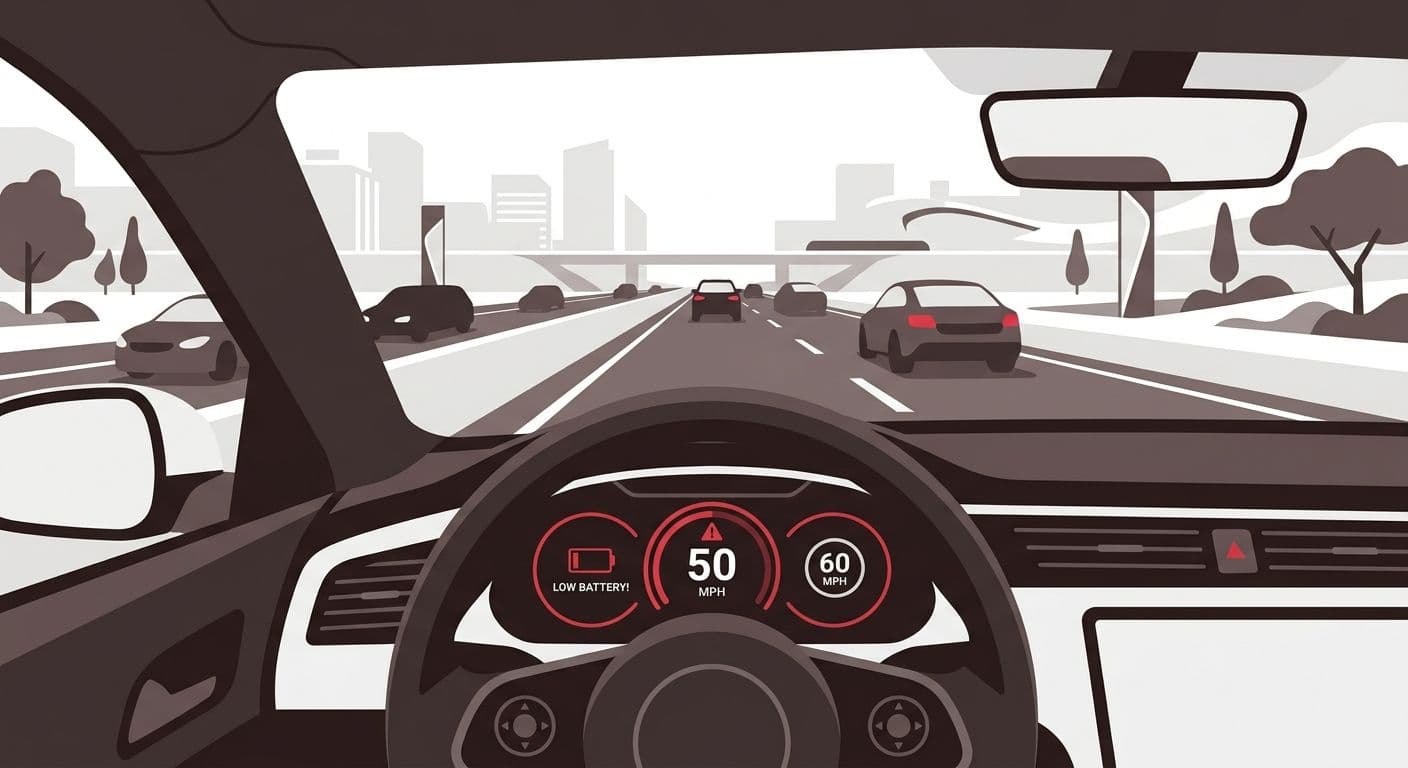
Immediate Response Protocol
If your EV is losing power and you cannot reach a charger, follow these steps immediately:
- Pull Over to Safety: As soon as you notice severe power loss, safely navigate to the side of the road. Aim for a flat, open location away from traffic. Avoid stopping on curves, hills, or in active traffic lanes.
- Secure the Vehicle: Once stopped, immediately turn on your hazard lights to alert other drivers. Engage the parking brake to ensure the vehicle remains secure.
- Contact Assistance: Call for roadside assistance. Your options include:
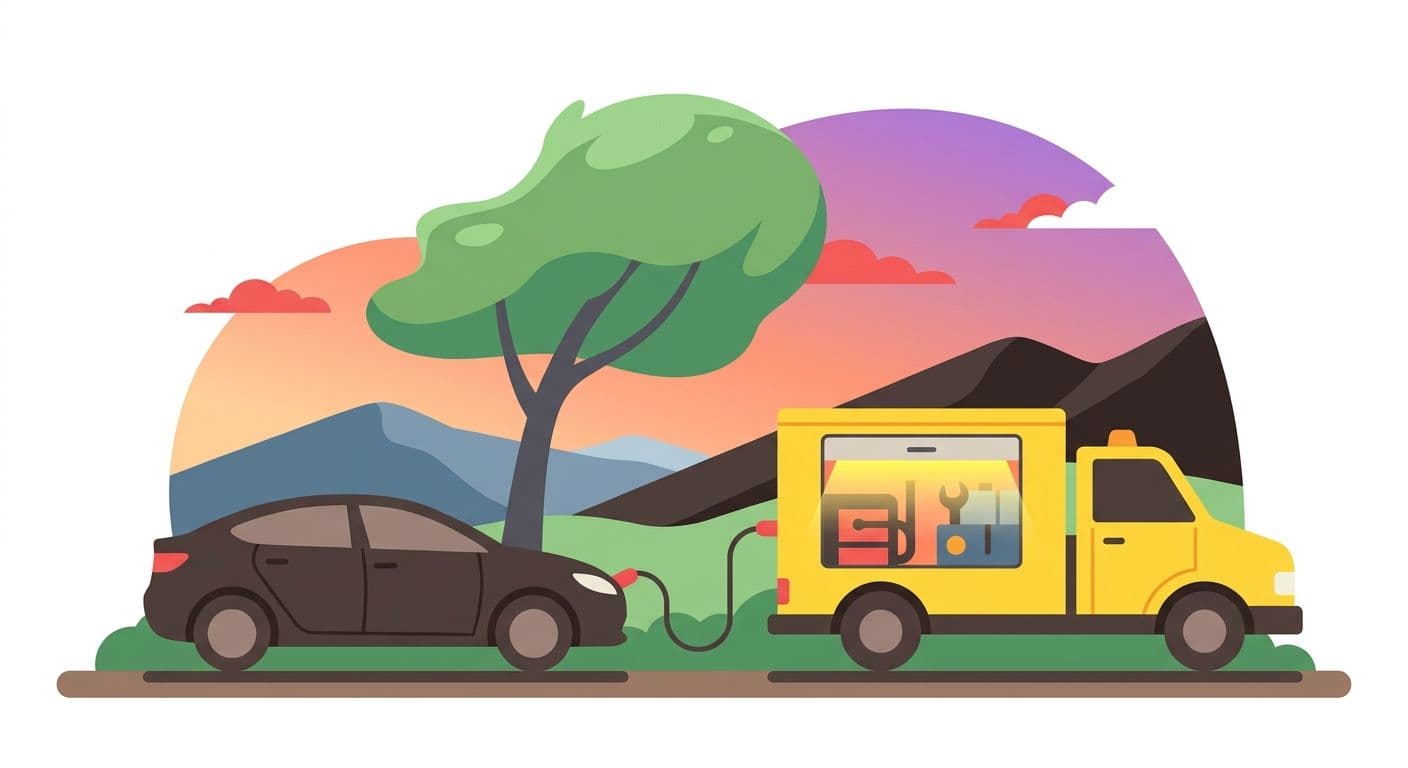
- Mobile Charging Services: Some providers can bring a mobile charger directly to you, giving you enough range to reach the nearest charging station.
- Professional Flatbed Towing: If on-site charging is not available, your EV will need to be transported on a flatbed tow truck. Towing an EV with its drive wheels on the ground can damage the electric motor and should be avoided.
Vehicle Integrity: Is Damage Possible?
A complete discharge is stressful for the battery, but modern EVs are engineered to prevent catastrophic damage. Running out of battery power is actually less likely to damage your EV's powertrain than starving an internal combustion engine of fuel. The Battery Management System (BMS) uses built-in buffers and safety protocols to protect the battery cells even at very low states of charge.
That said, repeatedly draining the battery to 0% can accelerate long-term battery degradation over time. An occasional complete discharge is unlikely to cause lasting harm, but it should not become a habit.
The Battery Management System includes buffers that protect cells even at 0% displayed charge
BMS Protection
Lower than starving a combustion engine of fuel in a single discharge event
Powertrain Risk
Repeated deep discharges to 0% can accelerate battery degradation over time
Long-Term Risk
Remain operational after main battery depletion - powered by a separate system
Steering & Braking
Prevention: Mastering Your Digital Gauges
The best way to handle a battery emergency is to avoid one entirely. Unlike older gas-powered vehicles with simple fuel gauges, EVs provide detailed, real-time energy consumption data you can use proactively:
- Monitor real-time energy use on your dashboard to understand how driving conditions affect your range.
- Use the built-in navigation to plan routes with charging stops included - most EV navigation systems will flag if your destination is beyond your current range.
- Account for climate control impact: Heavy use of heating or air conditioning can significantly reduce range, especially in extreme temperatures. Factor this in before long trips.
- Act on early warnings: When the 20% alert appears, treat it as an instruction to charge now - not a suggestion to consider it later.
Recovery Options After Complete Discharge
Once stranded with a fully depleted battery, you have three main recovery paths:
- Mobile Charger: The fastest solution if available in your area. A roadside assistance vehicle brings a portable charging unit directly to you, providing enough charge to reach a proper station.
- Flatbed Towing: The standard and universally safe method. A flatbed truck transports your EV to the nearest charging station without putting the drive wheels on the ground.
- 12V Auxiliary Battery Jump: It is not possible to jump-start the main high-voltage battery. However, your EV also has a separate 12V auxiliary battery that powers the onboard computers, lights, and control systems. If this smaller battery has died - which can happen after a prolonged full discharge - it may need a conventional jump-start to "wake up" the car's systems so it can then accept a charge from a mobile unit or tow truck.
Quick Reference: Do's and Don'ts
| DO | DON'T |
|---|---|
| Turn on hazard lights and engage the parking brake immediately after stopping. | Ignore the turtle or limp mode icon on your dashboard. |
| Use a flatbed tow truck for any vehicle transport. | Allow towing with the drive wheels on the ground - this risks motor damage. |
| Pull over to a flat, safe location away from traffic. | Stop near hills, blind curves, or active traffic lanes if it can be avoided. |
| Plan routes using built-in trip navigation with charging stops. | Rely on the last 10% of displayed range as a buffer. |
| Call for mobile charging or flatbed roadside assistance. | Attempt to jump-start the main high-voltage battery. |