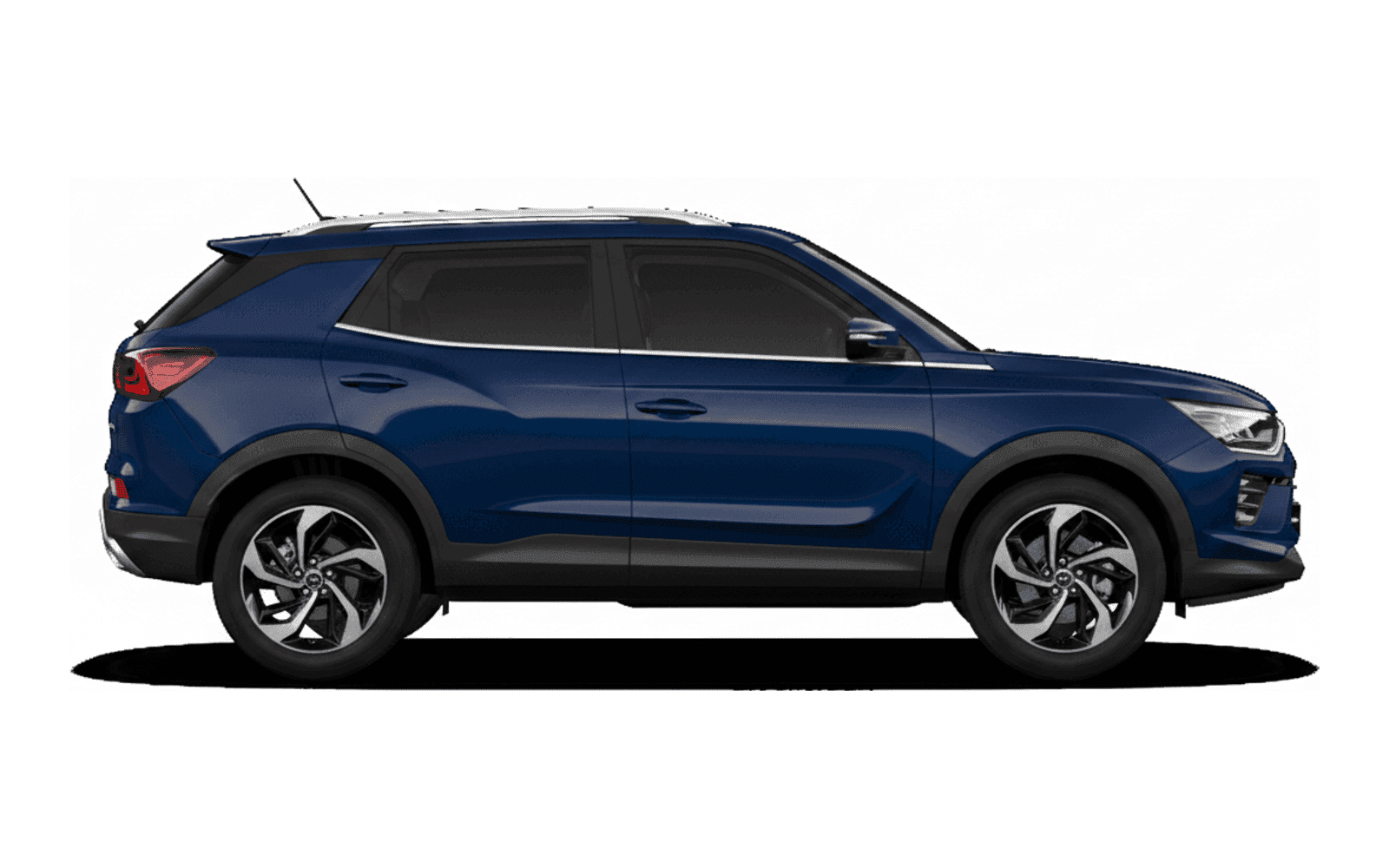
e-Motion
SSANGYONG KORANDO
Range
339 km
WLTP
0-100 km/h
8.5s
Power
140 kW
Top speed
156 km/h
Price in Hong Kong
By law, you need at least third party insurance.
Owner notes
8 Things to Know Before Buying SSANGYONG KORANDO in Hong Kong
Based on real owner experiences and reviews
01
Real-world energy consumption sits around 3.3 miles per kWh in mixed suburban and faster-road driving. That translates to roughly 290 km of usable range from the 55.3 kWh usable portion of the battery, falling noticeably short of the 339 km WLTP figure. Drivers who keep the car in Eco mode or stick mostly to city routes can stretch that further, but anyone planning regular longer trips should factor in more charging stops than rivals with similar battery sizes require.
02
The 551-litre boot is one of the largest in its price bracket, roughly 100 litres bigger than the Kia e-Niro and over 200 litres bigger than the Hyundai Kona Electric. No interior space was sacrificed in the conversion from the petrol/diesel Korando, and four adults over six feet tall can sit comfortably at the same time. For families needing cargo room from a compact electric SUV, this is a genuine standout.
03
Road noise from the factory-fitted Nexen tyres is a common complaint. Owners who have switched to Michelin tyres at replacement time notice a significant reduction in cabin noise and a more comfortable ride. Upgrading from the standard 17-inch "eco" wheels to 18-inch alloys also improves ride quality and appearance, though going to 19 inches makes the ride worse.
04
Regenerative braking offers three levels adjustable via steering-wheel paddles, but none of the settings is strong enough for true one-pedal driving. An additional frustration: the system occasionally resets itself to the weakest regen level without warning, which can catch drivers off guard in stop-and-go traffic.
05
Multiple reviewers were genuinely surprised by how competent the car is for the price, with one titling their review "Way Better Than It Should Be." Standard equipment is generous, including autonomous emergency braking, lane-keeping assist, a digital driver's display, and a reversing camera on even the base trim. The 7-year manufacturer warranty also exceeds what most competitors offer. The trade-off is interior material quality: piano-black plastic surfaces scratch easily, and chrome trim pieces on the door handles and stalks feel cheap to the touch.
06
At least one long-term owner in New Zealand reported the car failing to operate twice after DC fast charging sessions over a 19-month ownership period. While this appears uncommon, it is worth noting for buyers who plan to rely heavily on public rapid chargers rather than home charging. The 100 kW DC charging itself works as advertised, reaching 10-80% in about 41 minutes.
07
The 1,500 kg braked towing capacity is among the highest for electric SUVs in this size class. Only the much more expensive Hyundai Ioniq 5 (1,600 kg) beats it. For buyers who occasionally need to pull a small trailer or light caravan, the Korando e-Motion is one of very few affordable EVs that can do the job.
08
The central touchscreen is sluggish to respond and positioned deep in the dashboard, forcing the driver to lean forward and look away from the road. During at least one professional test drive, the entire infotainment system froze and spent several minutes rebooting. The 12.3-inch digital instrument cluster behind the steering wheel, by contrast, is sharp and well designed with useful EV-specific readouts.
Charging duration
What it costs to use in Hong Kong
Charging costs, licence fee, and realistic charging times. Tap the info icon to see the math.
Full charge time at a home socket
~10.4 hours
Charge stop time at a public fast charger
~52 minutes
ElectaCar real-world estimate
Technical specs
Detailed specifications
Performance, charging, dimensions, warranty, and colour data for this variant.
Performance
Charging
Dimensions
Reviews
Owner reviews
Compare with other EVs
See how the e-Motion stacks up against the competition.