Base
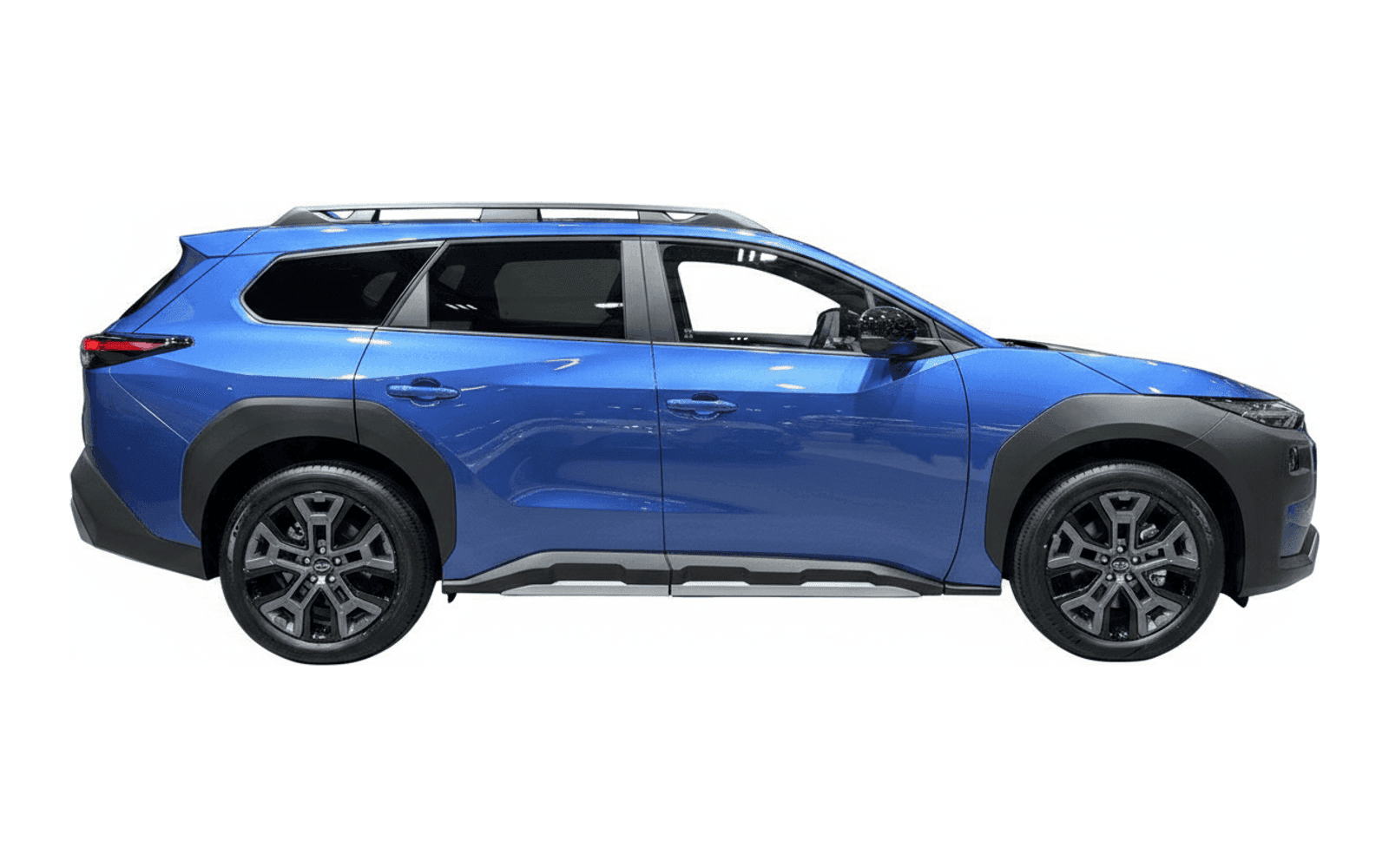
SUBARU E-OUTBACK
Price in Hong Kong
By law, you need at least third party insurance.
Owner notes
11 Things to Know Before Buying SUBARU E-OUTBACK in Hong Kong
Based on real owner experiences and reviews
01
The boot holds 619 to 633 litres with all seats up, which is larger than most competitors in this segment. It includes mounting hooks in the roof lining and remote-release handles that fold the rear seats from the boot opening. However, the rear seats only split 60:40 with no centre pass-through, so carrying long items like skis or surfboards while seating four passengers requires a roof rack.
02
There is no glove box. Subaru replaced it with an open storage area under the centre console. Items stored there are visible, unsecured, and can shift around while driving. For anyone who keeps documents, sunglasses, or valuables in a glove box, this is a daily inconvenience with no workaround other than adding aftermarket organisers.
03
The 74.7 kWh battery supports up to 150 kW DC fast charging and targets around 450 km of WLTP range. For a car this size and weight, the battery is on the smaller side compared to Chinese competitors offering 80-100 kWh packs. Real-world range in Hong Kong's hot summers with air conditioning running will be lower than the WLTP figure, so drivers with long daily commutes should factor in more frequent charging stops.
04
The interior from the steering wheel forward is shared with the Toyota bZ4X and Subaru Solterra. This includes the infotainment system, which is functional but not considered modern or polished by most reviewers. The 14-inch touchscreen supports wireless Apple CarPlay and Android Auto, but the native system itself feels behind Chinese and Korean competitors.
05
The squircle-shaped steering wheel can partially block the instrument cluster for some drivers. The digital display sits far forward on the dashboard, and depending on the driver's height and seating position, the top of the steering wheel cuts into the cluster's visibility. Adjusting the telescoping column helps but may not fully resolve it for taller drivers.
06
The raised EV battery floor creates a noticeable knee-up seating posture for rear passengers. Legroom is generous and feet slide under the front seats easily, but the high seat-to-floor angle can feel less comfortable on longer rides, especially for taller adults. Three adults can fit across the rear bench, but the width and raised floor make it practical only for short trips.
07
Off-road, the E-Outback is genuinely capable beyond what most EVs offer. It has 211mm of ground clearance, dual-motor symmetrical AWD, and two X-Mode settings (Snow/Dirt and Deep Snow/Mud). A new Grip Control feature acts as off-road cruise control, holding a set speed so the driver can focus on steering. In testing, it climbed steep muddy hills on standard road tyres without drama.
08
In Singapore (a market with similar EV taxation structures), the dual-motor AWD layout pushes annual road tax noticeably higher than expected. Because both motors' rated power is counted in the tax formula, the E-Outback costs roughly HK$7,000-10,000 more in total ownership costs over a typical ownership period compared to a similarly powerful single-motor EV. Hong Kong buyers should verify how the Transport Department calculates annual licence fees for dual-motor EVs before committing.
09
There is no one-pedal driving mode and regenerative braking is weak even on its strongest setting. Subaru says this is a deliberate design philosophy: the driver should always control the brakes. Anyone switching from an EV with strong regen (Tesla, BYD, Hyundai) will feel the difference immediately and will need to use the brake pedal far more often in stop-and-go traffic.
10
There is no front trunk (frunk) despite being a purpose-built EV platform. All cargo goes in the rear boot or the cabin. Combined with the missing glove box, personal storage options are more limited than in many competing electric SUVs that offer a frunk for charging cables, wet gear, or shopping bags.
11
The E-Outback retains an unusually large number of physical buttons and knobs across the steering wheel, centre console, and dashboard. Climate controls, drive mode selection, and the parking camera all have dedicated hardware controls rather than being buried in touchscreen menus. For drivers who dislike touchscreen-dependent cabins, this is a standout feature.
Technical specs
Detailed specifications
Performance, charging, dimensions, warranty, and colour data for this variant.
Performance
Charging
Dimensions
Reviews
Owner reviews
Compare with other EVs
See how the Base stacks up against the competition.