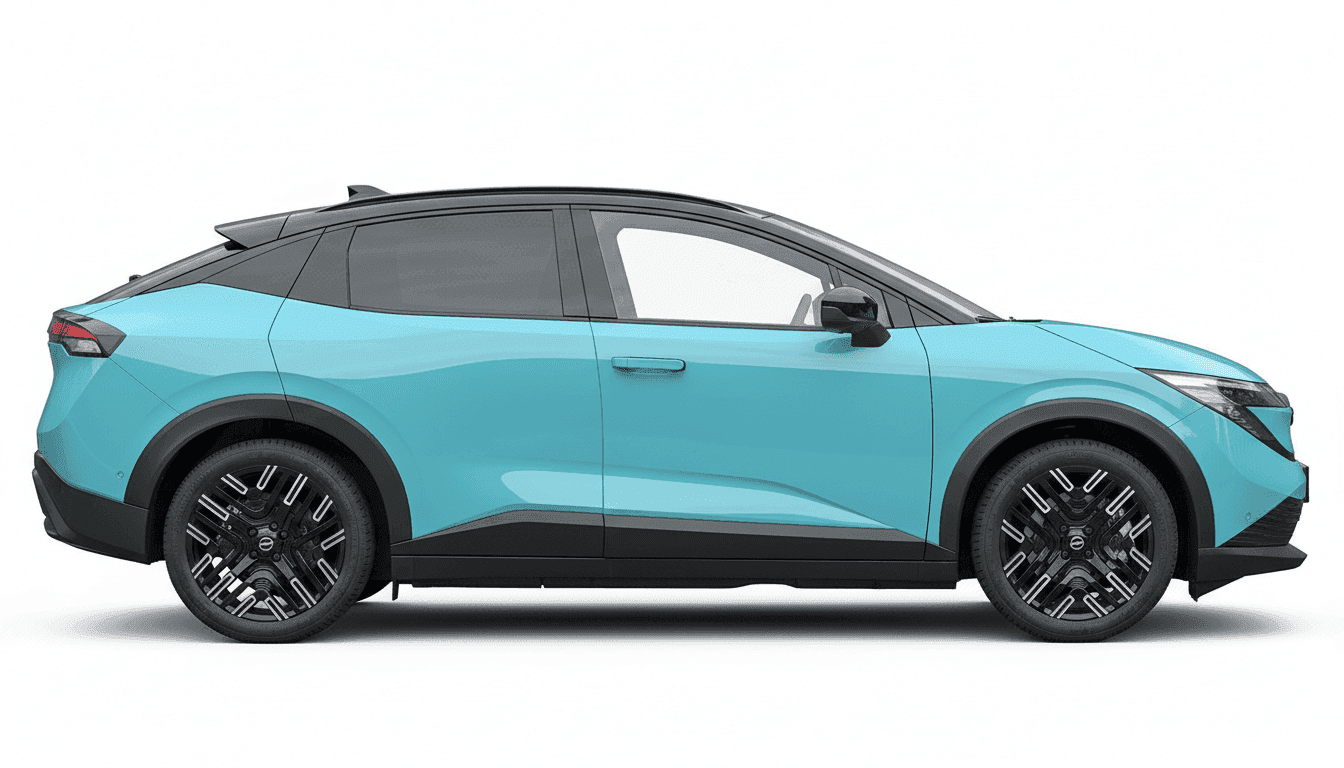
We've Been Here Before. We Just Forgot.
The electric car is not a glimpse of tomorrow. It is a homecoming - the return of an idea that ran first, slept for a century, and has now been woken to a neon glare and fanfare. And Hong Kong, it turns out, has its own chapter in that story - one that began long before the first car ever turned a wheel here.
Rediscover the story - the story we forgot.
It Started Here - Not in Silicon Valley
1828 - The First Spark. Before the first oil well was drilled, before anyone had heard the word "gasoline," inventors in Hungary, Scotland and the United States were already making things move on electricity. Around 1828 the Hungarian priest Ányos Jedlik built a tiny electric motor and used it to drive a small model carriage. Between 1832 and 1839 the Scot Robert Anderson assembled a crude electric carriage of his own, and in 1834 the Vermont blacksmith Thomas Davenport ran a motorised contraption around an electrified track. The electric car did not follow the combustion engine. It came first.
Gaston Planté Unlocks the Future
1859 - The Battery Breakthrough. In 1859 the French physicist Gaston Planté invented the rechargeable lead-acid battery. For the first time, electrical energy could be stored, spent and replenished again - the moment a fascinating experiment became a practical technology. The world was about to fall for electric transport, and would not even remember doing so.
The City Switches On
1888-1890 - Meanwhile, in Hong Kong. While Europe and America tinkered with batteries, Hong Kong was already wiring itself for an electric age. The Peak Tram opened in 1888 - the first funicular railway in Asia - and in December 1890 the Hongkong Electric Company began generating, starting the long switch from gas lamps to the electric light bulb. The grid here is older than the motor car. Electricity was part of Hong Kong life before petrol ever was.
Electric Cars Owned the Streets
1890s - The Golden Age. By the 1890s the electric vehicle was the sophisticated choice - quiet, clean and effortless to drive. William Morrison's electric carriage appeared in the United States around 1890, and within a decade EVs were everywhere city dwellers had no patience for noise and fumes. They were not a niche or a novelty. Around 1900, roughly a third of all the cars on American roads were electric - outnumbered only by steam, with petrol a distant third.
⚡ c.1900: about a third of US cars were electric - more than ran on petrol.
Hong Kong Chose Electric First
1903-1904 - Hong Kong's Own Crossroads. Here is the part most people miss. The very first motor cars reached Hong Kong between 1903 and 1905 - and they were petrol-driven, British-owned, and at first thoroughly unloved; the public only warmed to them around 1910. But in those exact same years the city made a different choice for its streets. On 30 July 1904 the first electric tram ran in Hong Kong - and the network has been electric every single day since, never once powered by horse or steam.
So Hong Kong's streets went electric before the car ever caught on. The petrol cars of 1905 are long gone; the electric "ding ding" still runs from Kennedy Town to Shau Kei Wan more than a century later. The homecoming isn't a foreign idea arriving - it's Hong Kong returning to a road it was already on.
A Hundred-Year Wrong Turn
1908 - The Detour. In 1908 Henry Ford's Model T arrived - mass-produced, cheap and petrol-powered, made affordable by oceans of newly discovered crude oil. The electric self-starter, introduced on the 1912 Cadillac, removed the last real inconvenience of the petrol engine. Starved of charging infrastructure and limited in range, electric cars quietly faded - not because they lost a fair contest, but because economics intervened. For nearly a hundred years the world took a detour and mistook it for the main road. In Hong Kong the same tide ran: by 1910 the petrol car had finally won the public over, and electric road transport became a memory - even as the electric trams kept humming.
Something Stirs in the Memory
1970s - The Stirring. The oil shocks of the 1970s delivered a jolt of recognition: dependence on fossil fuel was a vulnerability impossible to ignore. Questions that should never have been forgotten began to resurface. California mandated zero-emission vehicles from 1990, and General Motors built the EV1 in 1996 - limited, then discontinued, but living proof that the original idea still survived beneath a century of petrol culture.
The First Electric Car on the Register
1993 - Hong Kong Plugs Back In. Hong Kong's modern electric story has a precise starting point. In 1993, CLP Power imported a British-built Lucas Electric Metro and registered it with the authorities - the first electric vehicle ever licensed for Hong Kong's roads. A year later, in 1994, the government introduced its first registration-tax waiver for EVs. The range was short and the technology rough, but the door had been opened.
The World Remembers
2008 - The Recognition. Tesla's 2008 Roadster did not invent the electric car. It reminded the world what had always been possible - fast, beautiful, desirable - and shattered the assumption that going electric meant compromise. The Nissan Leaf followed in 2010, bringing EVs to everyday buyers. Hong Kong felt it almost at once: the Roadster reached the city in 2009, and the Leaf and Mitsubishi i-MiEV arrived for local buyers in 2010. Less a discovery than a recognition - the uncanny sense that we had known this all along.
The Return Becomes a Wave
2018-2025 - The Homecoming. Between 2015 and 2025 the return turned into a flood:
- China became the world's largest EV market.
- Lithium-ion battery costs fell by close to 90% from their 2010 levels.
- Almost every major automaker set a date to leave the combustion engine behind.
Hong Kong moved fastest of all. The One-for-One Replacement Scheme, launched in 2018, let owners scrap an old petrol car and register a new EV at a steep tax saving - and it worked: the number of registered electric private cars grew more than 600%. For all its wealth, Hong Kong has one of the lowest rates of private-car ownership in the developed world, yet it became one of the most electrified car markets on earth. By 2024 roughly 70% of all newly registered private cars were electric - a share second only to Norway.
🌏 By 2024, ~70% of Hong Kong's new private cars were electric - 2nd in the world only to Norway.
The Circle Completes
Now - What Comes Next. Solid-state batteries, ultra-fast charging, renewable-energy integration - the next chapter is being written now. Electric buses, taxis, trucks and ferries: the electrification of movement itself. As of early 2026, around 174,000 electric vehicles were on Hong Kong's roads - roughly one in five of every vehicle in the city. The government has pledged to stop registering new petrol and hybrid private cars by 2035, on the road to carbon neutrality by 2050. After almost two centuries and one long detour, the way ahead looks remarkably like the road we abandoned. Only better.
~174,000
EVs on HK roads (early 2026)
~1 in 5
Share of all HK vehicles
~70 %
New private cars electric (2024)
By 2035
Petrol & hybrid registration ends
2050
Carbon neutrality target
Welcome Back to the Future
Almost 200 years of interrupted history brought us here - and in Hong Kong, the electric road was never entirely abandoned. The trams never stopped. ElectaCar Hong Kong is here to complete the journey.
© 2025 ElectaCar Hong Kong - The Road Always Remembered